
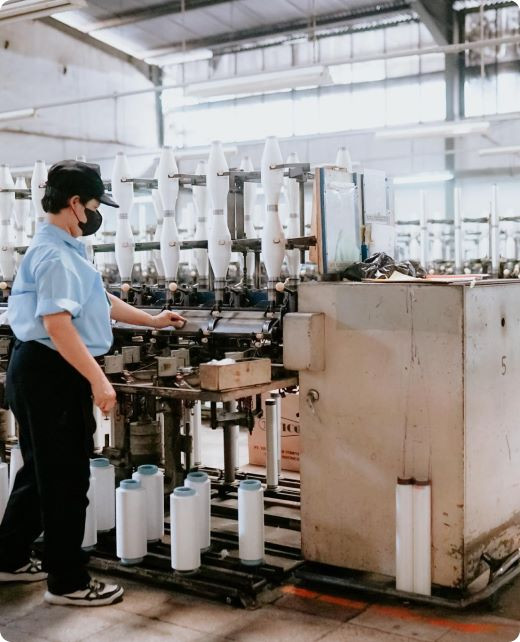
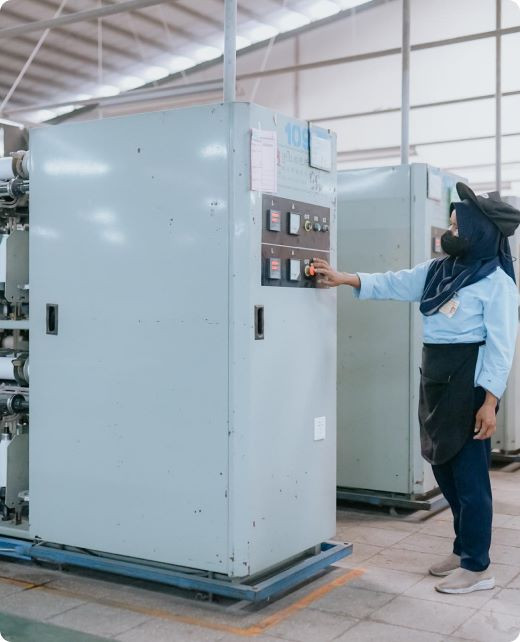

Fujitex uses sophisticated machines to be the core of textile production. These machines are able to spin fiber into yarn with mathematical precision, cut fabrics with high speed and accuracy, and provide perfect finishes through various finishing processes. With the latest computerized equipment and technology, the textile mill ensures high efficiency in production and consistent product quality.
a set of procedures and standards used to maintain product or service quality in a textile factory. This involves standards, inspections, testing, documentation, process improvement, employee training, corrective and preventive actions, quality control tools, customer feedback cycles and audits. SKK is important to ensure the consistency and reliability of textile products.
Waste management in textile factories is an important effort to reduce environmental impact. It involves the identification, segregation and treatment of solid, liquid and hazardous waste. Recycling efforts, cooperation with third parties, and employee training are also required. Continuous innovation in waste management is the key to increasing efficiency and sustainability in the textile industry.